
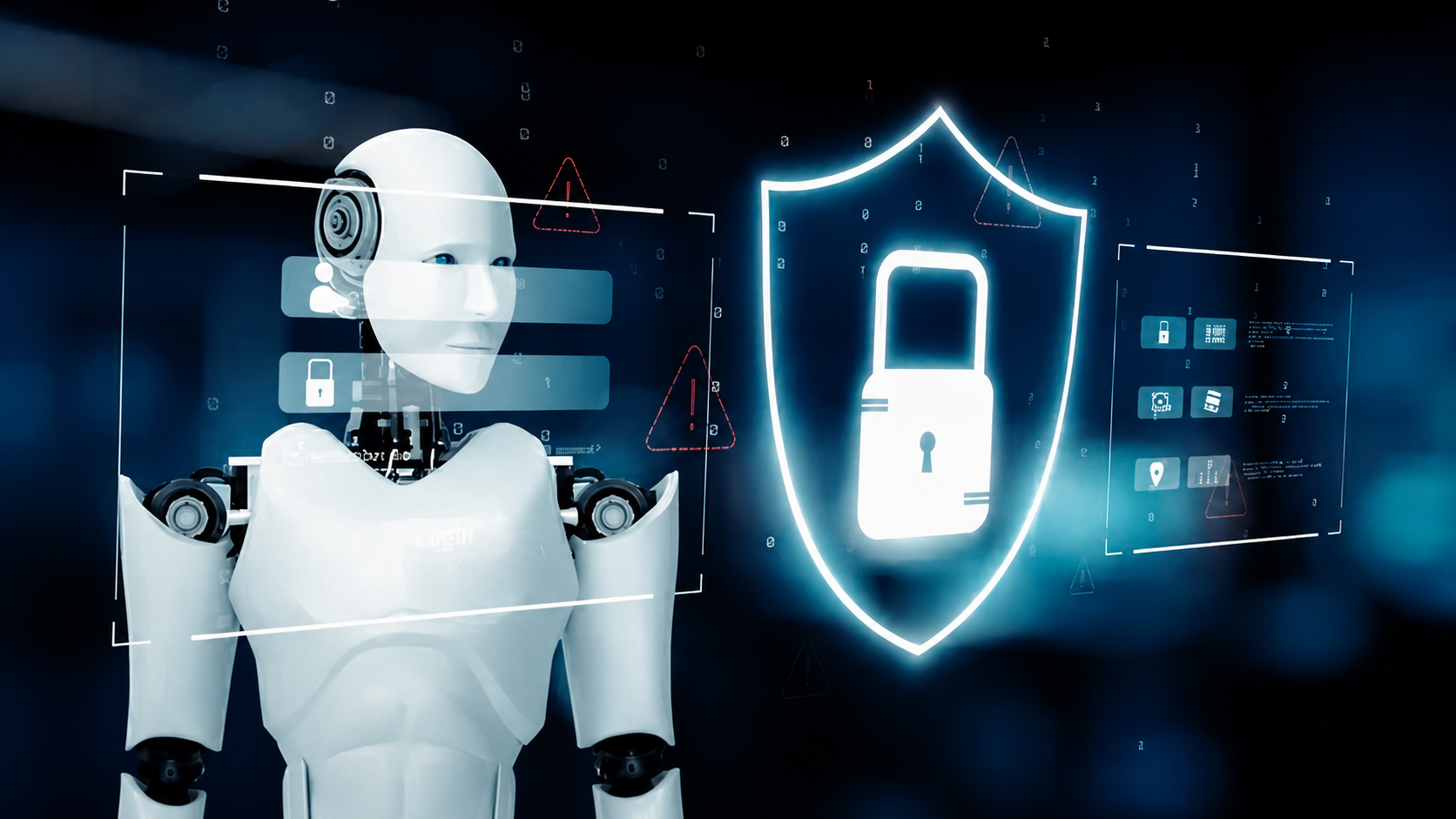
Humanoid Robots: The Next Frontier in Cybersecurity
The rise of humanoid robots is transforming industries, but it is also reshaping the cybersecurity landscape. Understanding their vulnerabilities is essential for organizations looking to embrace automation without exposing themselves to new and evolving cyber threats.
Humanoid robots are moving from research laboratories into real-world environments such as warehouses, manufacturing facilities, and offices. While these systems promise significant improvements in automation and efficiency, they also introduce a new category of cybersecurity risks. A connected humanoid robot is not only a machine — it is a mobile cyber-physical system that collects data, communicates with networks, and interacts with the physical world.
Recent security analyses of humanoid robots highlight a growing concern: these systems could become both powerful surveillance platforms and potential entry points for cyberattacks if not properly secured.
The Silent Observer That Never Sleeps
The most immediate concern surrounding these robots is their potential for unauthorized data collection and covert surveillance.
Unlike traditional IoT devices, humanoid robots are equipped with advanced sensor suites, including high-resolution depth cameras, sensitive microphones, and LiDAR sensors for 3D spatial mapping.
Security researchers have shown that insufficiently protected robotic systems may expose sensitive telemetry data, including audio, video, and environmental information, to unauthorized access or external network infrastructure.
This is not merely a privacy concern; in certain scenarios, compromised robotic systems could become tools for industrial espionage.
A robot deployed in a meeting room, laboratory, or research facility could potentially capture confidential conversations, observe proprietary designs, and create detailed maps of sensitive environments if adequate security controls are not in place. Since some robotic platforms may lack clear indicators of active data collection, transparency and privacy controls become essential.
In certain contexts, such risks may also raise compliance concerns under data protection frameworks such as GDPR and CCPA.
From Passive Observer to Active Attacker
The threat escalates further when a robot transitions from surveillance to active cyber operations.
By deploying an autonomous Cybersecurity AI (CAI) agent directly onto a robot’s processor, researchers have demonstrated how a compromised humanoid can leverage its privileged system access to attack its own manufacturer’s infrastructure.
In controlled ethical experiments, such AI agents autonomously mapped network connections, discovered exposed authentication credentials, and generated command injection attacks against cloud-based control systems.
Because the robot is already a trusted endpoint within the manufacturer’s ecosystem, it can identify attack vectors without triggering traditional security defenses.
If compromised, a humanoid robot could potentially serve as a foothold for lateral movement across connected networks, enabling persistent access and further malicious activity.
The Root Problem: Weak Cryptography and Open Interfaces
Why are these platforms so vulnerable? The answer lies in architectural decisions that prioritize functionality over security.
Key weaknesses identified in leading models include:
– Static cryptographic keys – Many robots use fixed 128-bit encryption keys shared across entire fleets. Compromising one unit may expose all robots of the same line.
– Weak onboarding procedures – BLE-based configuration processes often lack proper authentication, allowing nearby attackers to inject commands and gain root access.
– Unencrypted internal communication – Protocols such as DDS are frequently used without encryption, enabling interception or injection of sensor and control data.
– Outdated software stacks – Some humanoid robots ship with legacy operating systems that have already reached end-of-life, missing critical security patches.
A New Defensive Paradigm
The speed and autonomy of AI-driven attacks are gradually rendering traditional Security Operations Centers (SOCs) less effective in this domain.
We are entering an era of algorithmic arms races, where offensive AI systems can only be countered by equally advanced defensive AI in cybersecurity.
For organizations deploying humanoid robots in production, logistics, or research environments, security can no longer be an afterthought.
The future of humanoid robotics will not be defined only by artificial intelligence, mobility, or productivity. Trust and security will be equally critical. Organizations adopting these systems must treat robots as connected digital assets and protect them with the same level of discipline applied to servers, cloud infrastructure, and enterprise networks.
The humanoid era is arriving — and cybersecurity must evolve alongside it.

Author: Albin Duraković, Cybersecurity Engineer, Comtrade System Integration